


A care plan can count family help only after each required function is matched to a willing, workable, sustainable role—and every uncovered gap has a backup.
Read More

Home care, assisted living, and a staged plan can sound like different answers. A functions-first comparison shows what each path must actually prove.
Read More

A long-term care policy can support the care you would want without being the whole plan. See what it can protect and what remains yours to plan.
Read More

A health change can alter coverage, caregiving, and near-term cash needs. Start with the nearest deadline, then revisit the retirement date with updated facts.
Read More

A retirement budget captures expenses. A spending-pattern review shows when meaningful choices are creating a new baseline and what that could change elsewhere
Read More

Compare buying and renting through the money each path costs, the responsibilities it creates, and how well the property could support your life.
Read More

Retirement cost pressure can come from spending, care, family help, or timing. Identify the source and duration before choosing the response.
Read More

Build a later-life support team that protects the partnership, separates practical help from authority, and remains ready after the first death.
Read More
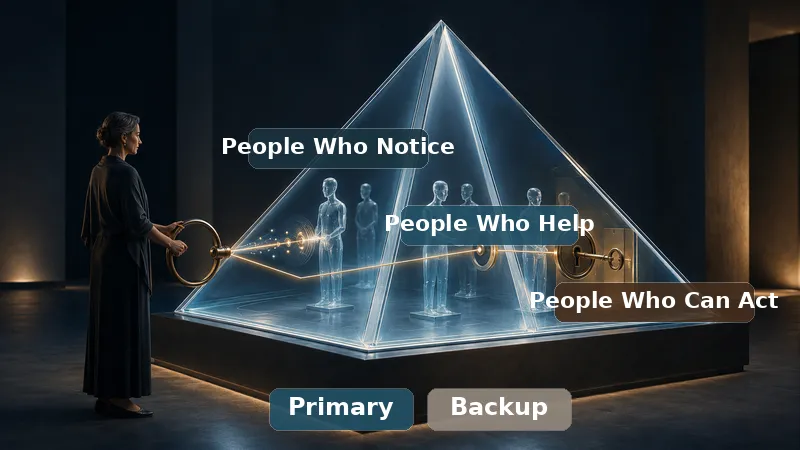
Build a later-life support team by defining each person’s role, authority, and backup.
Read More

See why each spouse needs separate legal and medical documents, distinct authority paths, and successors who can serve before a crisis.
Read More

A trusted person can hold different roles across your documents. Review what each role permits and name a backup.
Read More

A solo retiree’s hospitalization plan should assign the essential roles. Each responsibility also needs a practical backup.
Read More
