


Retirement changes a portfolio's job, but it doesn't automatically create a stock allocation. See which household facts should drive the review.
Read More

A preferred care path is not yet a transition plan. Learn what must be defined, verified, and backed up before urgency compresses the choices.
Read More

A care plan can count family help only after each required function is matched to a willing, workable, sustainable role—and every uncovered gap has a backup.
Read More

When an adult child begins driving your car regularly, trace the change through the auto liability policy to the umbrella before relying on it in your
Read More

See whether verified disability coverage reaches the point when your retirement plan no longer needs earnings—and what an uncovered span could change.
Read More

A long-term care policy can support the care you would want without being the whole plan. See what it can protect and what remains yours to plan.
Read More

A health change can alter coverage, caregiving, and near-term cash needs. Start with the nearest deadline, then revisit the retirement date with updated facts.
Read More
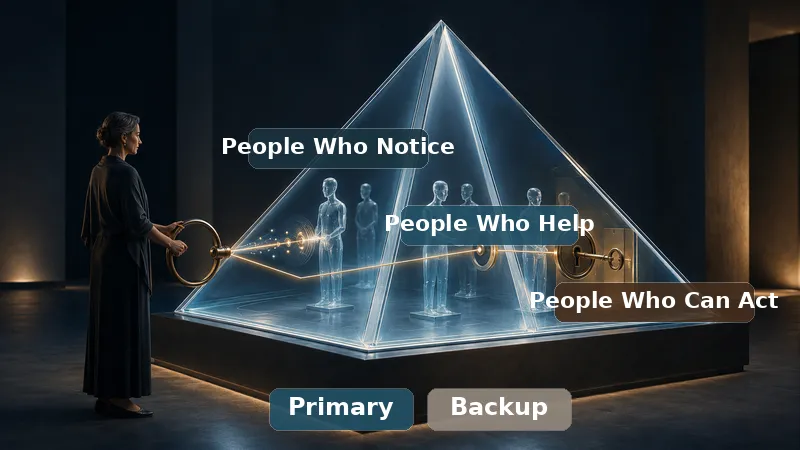
Build a later-life support team by defining each person’s role, authority, and backup.
Read More

A solo retiree’s hospitalization plan should assign the essential roles. Each responsibility also needs a practical backup.
Read More

Planning for two long-term care needs means testing each spouse separately, protecting the spouse needing less help, and preparing for overlap.
Read More

A solo care plan needs more than savings and a list of names. Connect with the people, services, authorities, funding, and backup that can help you.
Read More

Investments, Retirement Income, Risk Management, Tax Planning
Read More
